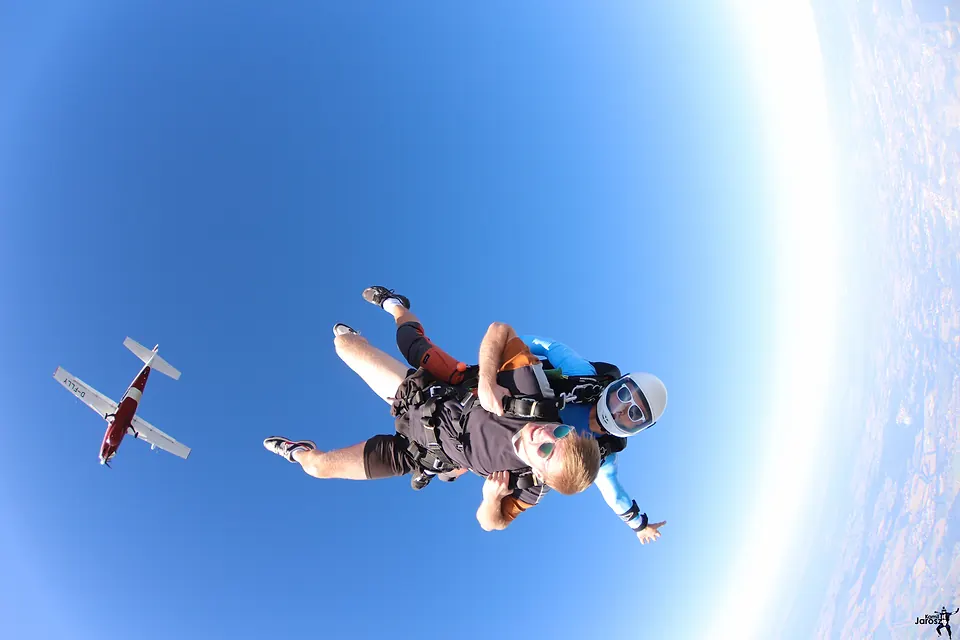
Freefall lasts several seconds, but for the body, it's an intense experience. Here's what really happens to you from the moment you jump.
Why you don't feel like you're falling
The feeling of falling, which you know from a roller coaster, comes from acceleration. In freefall, after a few seconds, you reach terminal velocity (about 200 km/h) and stop accelerating — air resistance balances gravity. The brain perceives this more like lying on a cushion of rushing air than falling down.
Adrenaline — what it does to the body
At the moment of the jump, the body releases adrenaline. The heart speeds up, pupils dilate, senses sharpen. It's a natural body reaction — and it's why you'll remember the jump for years.
Breathing and air rush
The air rush at 200 km/h is strong — at first, breathing may feel different than usual. Instructors teach a simple technique before the jump, so you don't have to worry about it.
Ears and pressure
During ascent and descent, pressure changes. Ears may pop — swallowing saliva or yawning helps. If you have a cold or blocked sinuses on the day of the jump, be sure to tell the instructor.
After the parachute opens
The canopy opening slows the flight. From the roar of rushing air, you transition to silence and a calm flight — it's the moment when most people start to fully enjoy the view.
Is it safe for the body
For a healthy person, short g-forces at opening are well tolerated. That's why we pay attention to health status and contraindications before the jump.