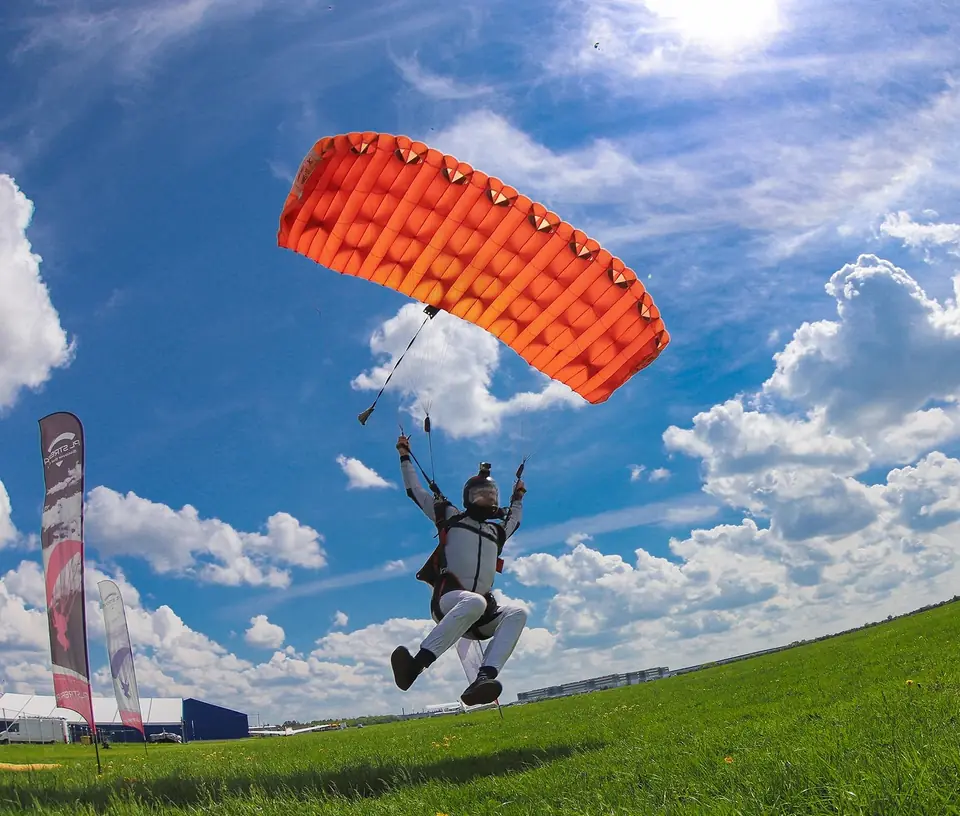
Tandem jump — what does it involve?
A tandem jump is the easiest way to experience freefall without any prior training. You are connected by a harness to an experienced instructor, who is responsible for exiting the aircraft, freefall, opening the parachute, and landing. Your job is to enjoy the moment and follow a few simple instructions.
Although you do not need to know anything, good preparation makes the day more comfortable, calmer, and more pleasant. Below you will find a checklist worth reviewing the day before.
What to wear for the jump?
- Comfortable sportswear suited to the weather and season
- Lace-up sports shoes that fit the foot well — no flip-flops, sandals, or heels
- A thin sweatshirt or jacket: at an altitude of around 4000 meters it is noticeably colder than on the ground, by even several degrees
- Long hair is best tied back
In summer, avoid overly loose clothing that flaps heavily during freefall. In winter, go for layers.
What should you avoid before the jump?
- A heavy meal right before the jump — it is better to eat lightly 1–2 hours earlier to avoid nausea
- Alcohol the night before and any intoxicants on the day of the jump
- Jewelry, chains, earrings, scarves, and other loose items that could get caught or lost
- Arriving at the last minute — rushing only increases stress
Documents and formalities
Bring an ID document with you. On site, you will sign a statement, and the instructor will conduct a short ground briefing. You will learn:
- how to position your body in freefall (the characteristic “arch”)
- what to do with your arms and legs at each stage
- how to lift your legs for landing
These are just a few simple rules — the instructor will remind you of them again in the aircraft.
How to manage stress before your first jump?
Light nerves are completely natural and usually fade within the first seconds after exiting the aircraft. A few things help you handle them:
- Get a good night’s sleep the night before
- Arrive with time to spare and do not plan a tight schedule after the jump
- Breathe calmly and listen to the instructor — they are the one responsible for safety
- Focus on the views and emotions, not on “what if” scenarios
How much time should you set aside?
You will usually spend several hours on site. This includes: registration and ground briefing, fitting and putting on the equipment, waiting for suitable conditions and your turn, the flight to altitude, and the jump itself. The freefall alone lasts several dozen seconds, and the flight under the open canopy takes a few minutes. It is best to reserve half a day for the whole experience and not plan anything urgent right after.
Can I bring companions?
Of course — your loved ones can cheer you on from the ground. It is a great keepsake, especially if you decide on a jump recording from the instructor’s camera.
Ready for your first time?
Do you have questions about the date, the drop zone, or the requirements? Contact us — we will help you choose a convenient day and clear up any doubts.